In this post, I want to discuss my monitoring chain. We will start with the loudspeakers; I will cover amplifiers later.
Beyond technical measurements, I rely on regular listening tests of circuits and individual components. I place immense value on audio expertise; often, the ear provides more significant data than instrumental testing alone. Listening is the final stage of development, and the monitoring tools must be fit for the task.
I am not interested in finish, price, or brand prestige. My focus is on pure engineering: directivity, distortion, the relationship between distortion and sound pressure, and SPL.
When searching for monitors based on these criteria, you inevitably fall down a rabbit hole. The obvious exits — standard studio solutions like Genelec or Klein + Hummel — are well known. But they are not the only solutions.
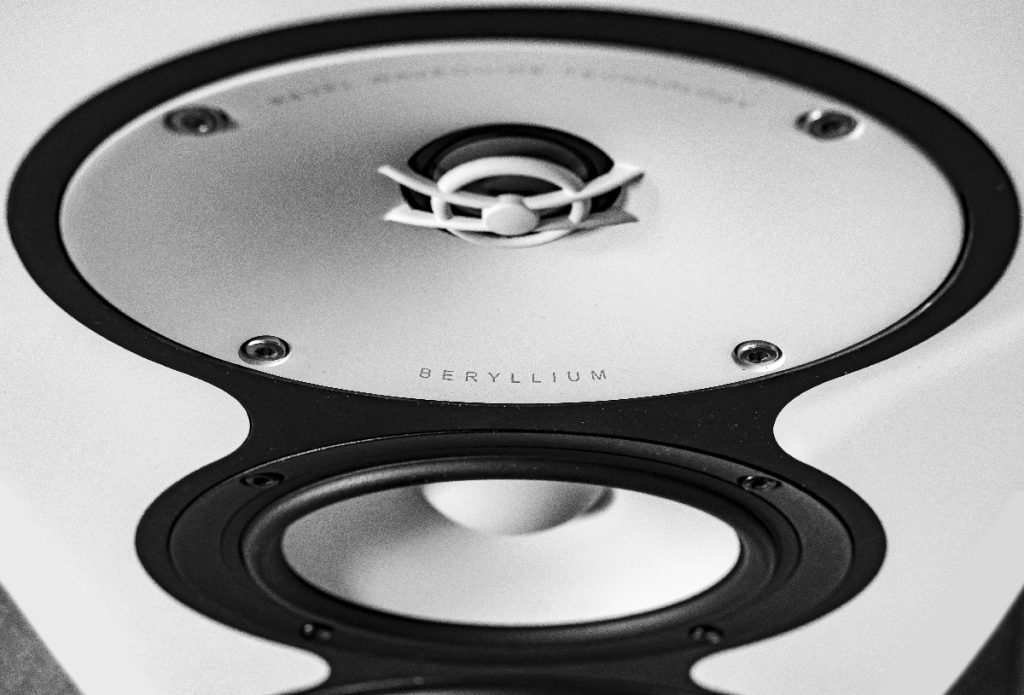
My choice fell on a relatively rare brand: Revel (a Harman division), specifically the Revel F228Be. I will not repeat marketing clichés about plasma coating or beryllium tweeters. Technically, the design is executed at the highest level, but good specs are only the foundation. Beyond that lies the art: the reconstruction of sound images through a symbiosis of engineering and psychoacoustics.
I know for a fact that Harman has invested decades into psychoacoustic research. I have studied the work of Dr. Floyd Toole, former VP of Harman. Interestingly, Dr. Toole uses this exact series in his own home. I understand his choice completely; I have the physical manifestation of his research in my hands.
However, every coin has a flip side. I am interested in the “dark side” of these speakers: their ruthless revelation of defects. Revels hide nothing. If there is a flaw in a circuit, it will sound atrocious.
Welcome to hell.